8 Best AI Chatbot Software for Small Business in 2026
Customers now expect an answer within minutes, not business days — and most small businesses can't staff a round-the-clock support team to deliver that. AI chatbots have become the practical middle ground: software that answers common questions instantly, hands off complex issues to a human, and works while you sleep.
The chatbot market has gotten crowded, and a lot of "AI-powered" claims are marketing dressing on what's really a simple rules-based bot. We looked past the buzzwords to focus on tools that use genuine natural language understanding, integrate with the platforms small businesses already use, and don't require a developer to set up.
Why Small Businesses Are Adding AI Chatbots in 2026
Customers now expect an answer within minutes, not business days — and most small businesses can't staff a round-the-clock support team to deliver that. AI chatbots have become the practical middle ground: software that answers common questions instantly, hands off complex issues to a human, and works while you sleep. The chatbot market has gotten crowded, and a lot of "AI-powered" claims are marketing dressing on what's really a simple rules-based bot. We looked past the buzzwords to focus on tools that use genuine natural language understanding, integrate with the platforms small businesses already use, and don't require a developer to set up.
How We Evaluated These Tools
We compared pricing at the small-business tier (not enterprise quotes), how long setup takes for a non-technical user, whether the AI actually understands varied phrasing or just matches keywords, and how well each tool hands off to a human when needed.
The 8 Best AI Chatbots for Small Business
Intercom Fin — Best Overall for Customer Support
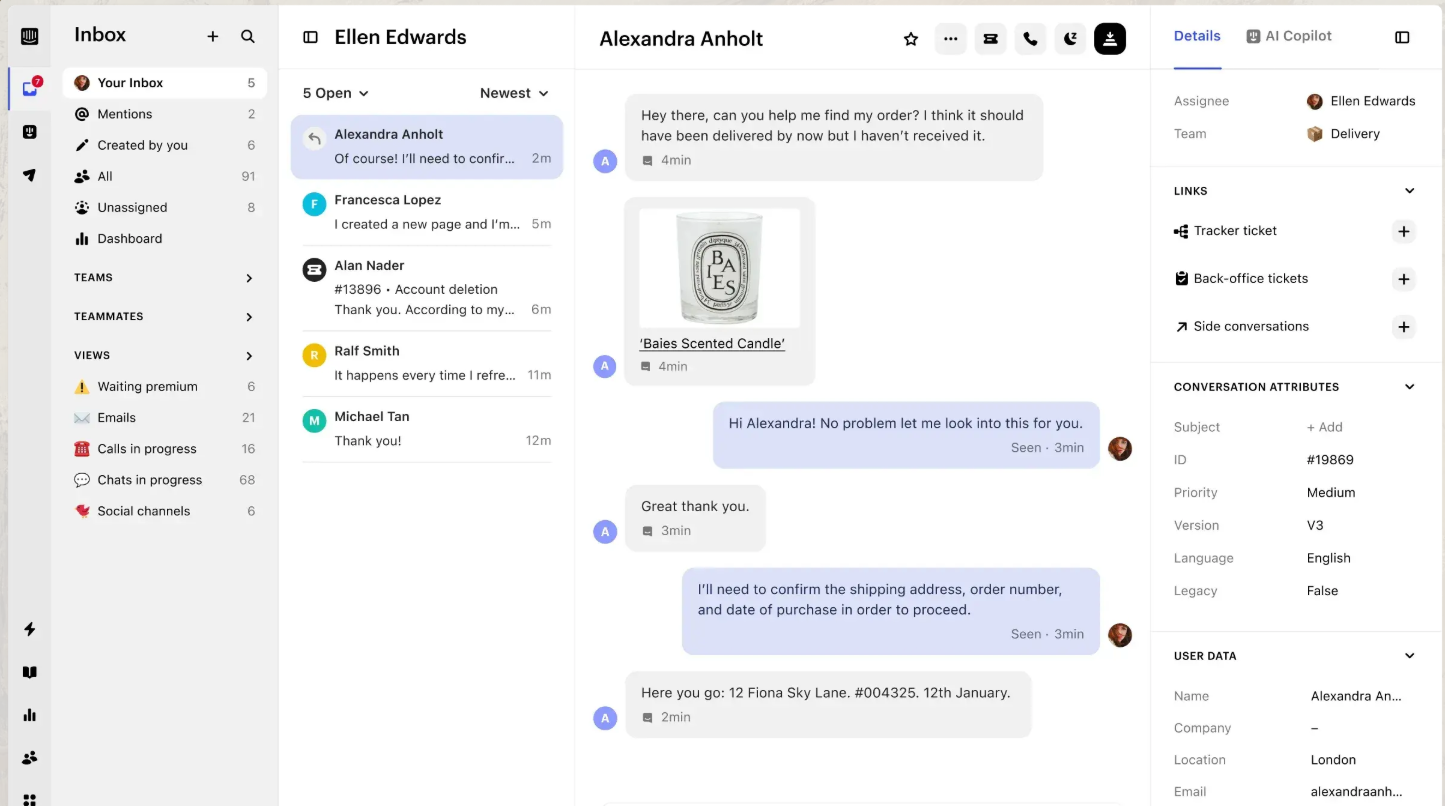
Intercom's Fin AI agent sits on top of your existing help center content and resolves a meaningful share of support tickets without human involvement. It's priced per resolution rather than a flat monthly fee, which is genuinely useful for businesses with unpredictable support volume — you're not paying for capacity you don't use. The setup process is fast if you already have a help center; if you don't, expect to spend a few hours writing help articles first, since Fin's answers are only as good as the content it's trained on. It's a strong pick for businesses that already do support through Intercom and want to reduce ticket volume without hiring.
Tidio — Best Budget Option
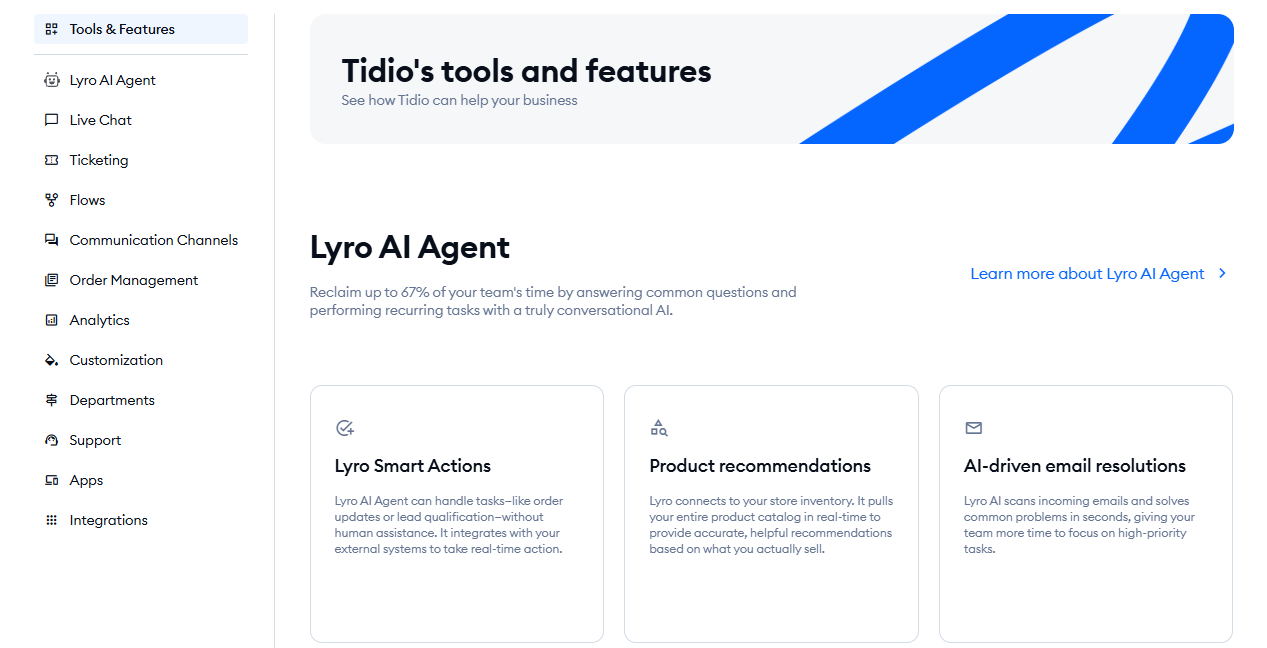
Tidio combines live chat with an AI chatbot (Lyro) at a price point accessible to solo founders and very small teams. It handles common FAQs well and integrates cleanly with Shopify and WooCommerce, making it a natural fit for small e-commerce stores. The AI is noticeably less sophisticated than Intercom's at handling ambiguous or multi-part questions, but for straightforward "where's my order" or "what are your hours" queries, it performs reliably at a fraction of the cost.
Drift — Best for Sales-Led Websites
Drift is built around converting website visitors into sales conversations rather than deflecting support tickets. If your website's main job is generating leads rather than answering support questions, Drift's conversational forms and meeting-booking flows are more useful than a generic FAQ bot. It's priced toward mid-size teams rather than solo founders, so smaller businesses may find it more tool than they need.
Screenshot pendiente: Drift
Captura de pantalla pendiente
ManyChat — Best for Social Media DMs
If most of your customer interaction happens through Instagram and Facebook Messenger rather than your website, ManyChat is purpose-built for that. It automates DM responses, comment replies, and can run interactive campaigns directly inside social platforms. It's less useful if your business runs primarily through email or a website contact form.
Zendesk AI — Best for Existing Zendesk Users
Businesses already using Zendesk for support tickets get the most value from its native AI add-on, since it works directly with your existing ticket history and macros rather than requiring a separate system. Standalone, it's a harder sell — the AI features are priced as an add-on to an already substantial Zendesk subscription, so this makes the most sense as an upgrade rather than a starting point.
Freshchat — Best for Multi-Channel Support
Freshchat (part of Freshworks) handles chat, email, and WhatsApp from one inbox with AI-suggested replies and basic bot automation. It's a reasonable middle-tier option — more capable than Tidio, less expensive than Intercom — for a business fielding questions across three or four channels and wanting one dashboard rather than juggling separate apps.
Chatfuel — Best No-Code Builder
Chatfuel focuses on drag-and-drop bot building without writing conversation flows in code, primarily for Messenger and Instagram. It's a good fit for a marketing-minded small business owner who wants to build promotional or FAQ bots without developer help, though its natural language understanding lags behind Intercom or Zendesk for genuinely open-ended questions.
Ada — Best for Scaling Support Volume
Ada is built for businesses anticipating rapid growth in support volume and wanting a chatbot that can be trained on a large knowledge base without linear cost increases. It's overkill and overpriced for a five-person team, but a strong option for a fast-growing small business bracing for a spike in customer questions.
How to Choose the Right Chatbot for Your Business
Start with where your customers actually reach out — website chat, social DMs, or email — and pick a tool built around that channel rather than one that claims to do everything adequately. Then check whether the tool integrates with your existing help desk or CRM; a chatbot that lives in isolation from your other customer data creates more manual work than it saves. Finally, budget for the time it takes to write good source content (FAQs, help articles) since even the best AI chatbot performs only as well as what it's been given to learn from.
Frequently Asked Questions
Do I need technical skills to set up an AI chatbot?
Most tools on this list, including Tidio, ManyChat, and Chatfuel, are designed for non-technical users with visual builders. Intercom and Zendesk require a bit more setup time but no coding.
Will an AI chatbot replace my support team?
For most small businesses, it reduces ticket volume rather than eliminating the need for a human — expect it to resolve routine questions while routing complex ones to a person.
How much should I expect to pay?
Budget tools like Tidio start under $50/month; mid-tier options like Freshchat and Zendesk AI typically run $100–400/month depending on volume; Intercom's usage-based pricing can vary widely based on resolution volume.